Webinar: Building collective power for pay equity through an intersectional lens

Webinar: Building collective power for pay equity through an intersectional lens
Event Details
Thursday, April 16, 2026
12:30 PM – 1:30 PM PT
Location: Zoom
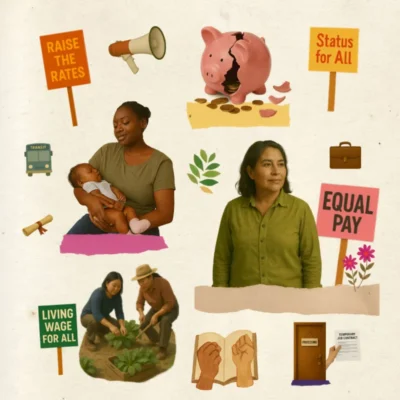
This year, Equal Pay Day is on April 16. It represents how much longer into 2026 a racialized woman must work to catch up to what a white man earned in 2025.
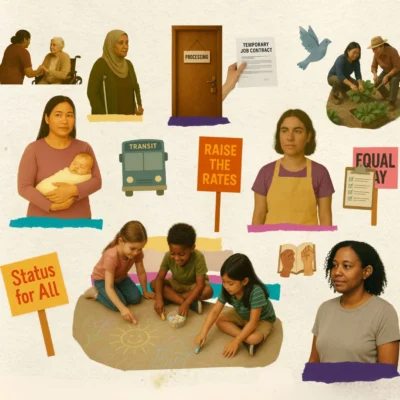
BC and Canada’s colonial systems are buil t on economic injustice, and that continues to influence who earns what today. Pay and income gaps across gender, race, immigration status, and ability are not isolated problems—they are symptoms of deeper systemic injustices rooted in colonialism, racism, capitalism, ableism, and gender-based discrimination.
These disparities are most severe for Indigenous, racialized, migrant, and disabled people, as well as for older workers and caregivers. This form of inequality extends far beyond wages, affecting economic justice and the well-being of racialized and gendered people.
But change is possible! When we work together, across sectors and communities, we can tackle systemic inequities and advance meaningful economic justice.
This Equal Pay Day, join us for a panel discussion exploring West Coast LEAF’s multi-year, community-engaged Income and Pay Gap Series, which offers tools to deepen understanding of pay and income inequities and build pathways to economic justice. We’ll explore how intersecting systems of power shape economic outcomes, share strategies for advancing equity, and discuss how policy and collective action can drive meaningful change in BC.
Speakers
Cenen Bagon is a steering committee member and co-founder of the Vancouver Committee for Domestic Workers and Caregivers Rights (CDWCR). She has been an activist for justice in Canada, particularly for migrants, workers, and women, rooted in a democratic socialist, anti-racist, and feminist vision since 1979.
Véronique Sioufi, PhD, (she/her) is a Racial Equity Researcher and Policy Analyst at BC Policy Solutions, where she leads a community-driven research desk dedicated to applying an intersectional lens to socio-economic policy. This work is guided by advocates from community organizations, unions and academia. Find out more about her work at bcpolicy.ca/racialequity
Explore our economic justice work